Why Building Capability Is a Journey, Not a One-Time Event
Organizations invest heavily in training their Quality Engineering teams. Teams attend courses on test automation, AI-assisted testing, observability, performance engineering, and agile quality practices. Yet many organizations struggle to translate this investment into lasting improvements.
The reason is simple.
Capability doesn’t develop overnight. It matures over time.
High-performing Quality Engineering teams don’t become successful because they attended a single training course. They continuously learn, experiment, collaborate, and improve. Their success is the result of a deliberate learning journey.
At TestingSaaS, together with our partner InnovaTeQ, we believe that sustainable improvement comes from guiding teams through a maturity journey rather than delivering isolated training sessions.
Many organizations approach learning as a collection of individual events.
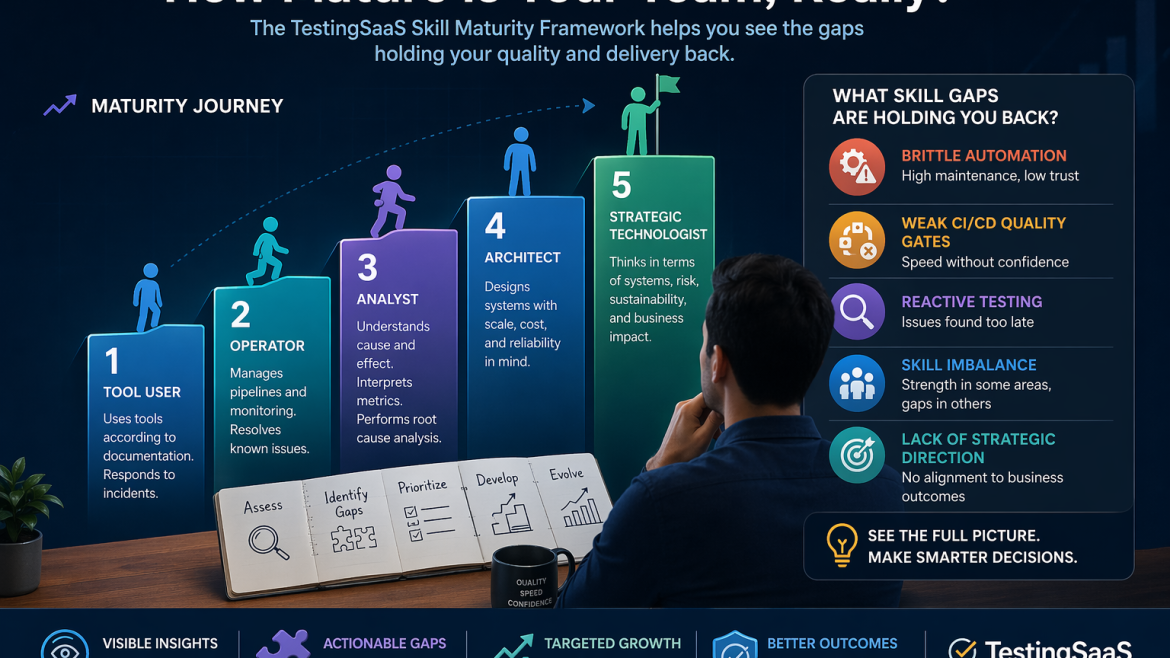
A Maturity Model Instead of a Training Calendar
- A Playwright course this month.
- An AI webinar next month.
- A performance workshop later in the year.
While each activity may be valuable, they often lack a common direction.
A maturity model provides that direction by answering one important question:
Where are we today, and what is the logical next step?
Instead of focusing on isolated skills, a maturity model focuses on developing organizational capability over time.
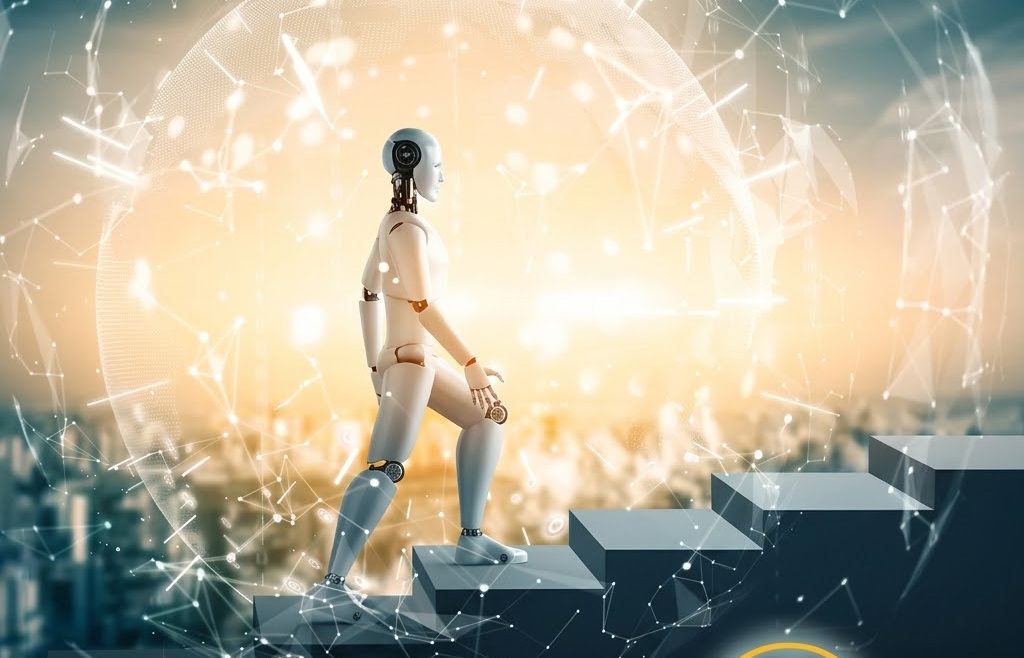
The Learning Journey
We view capability development as six progressive stages.
Awareness
      ↓
Training
      ↓
Practice
      ↓
Workshop
      ↓
Coaching
      ↓
Continuous Improvement
      ↓
Business Value
Each stage builds upon the previous one.
Stage 1 – Awareness
Every improvement starts with awareness.
Teams first need to understand why change is necessary.
Questions often include:
- Why should we improve our testing approach?
- What is observability?
- How can AI support Quality Engineering?
- Why is performance engineering becoming more important?
- What challenges are slowing our delivery?
At this stage, organizations are creating curiosity rather than changing behaviour.
Typical activities include:
- Conference talks
- Lunch-and-learn sessions
- Webinars
- Internal presentations
The goal is to inspire.
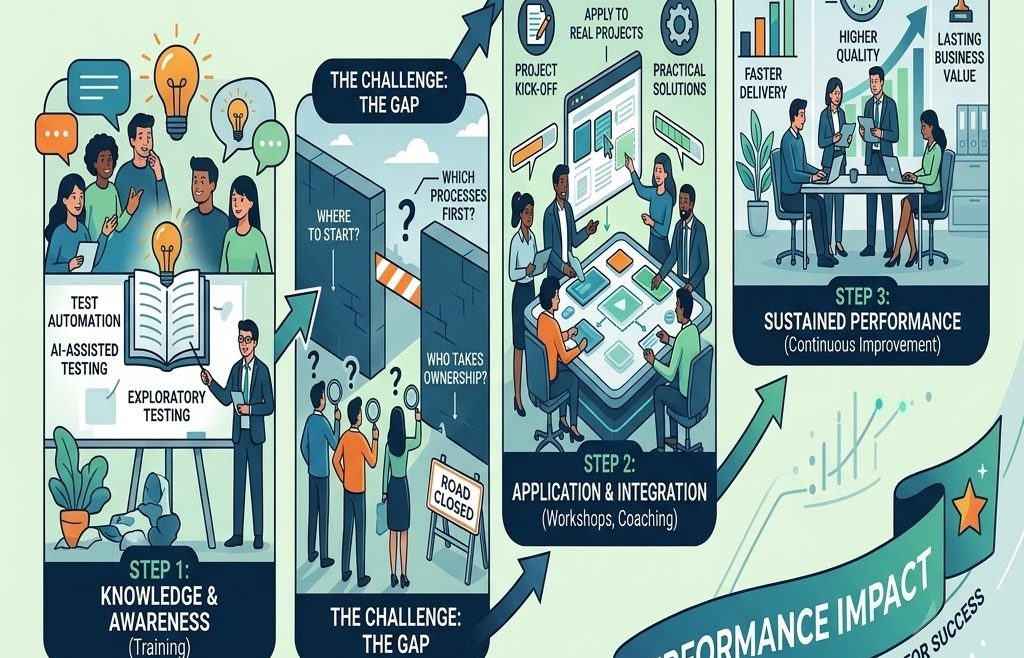
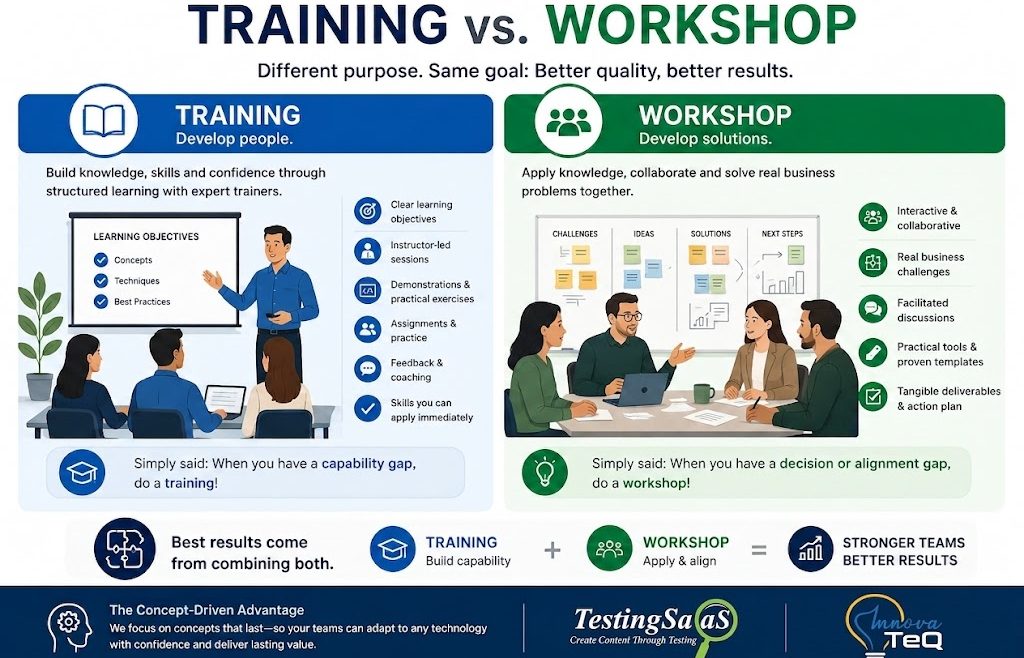
Stage 2 – Training
Once awareness exists, teams need knowledge.
Training builds capability by introducing concepts, frameworks, and practical techniques.
Examples include:
- Observability Strategy Training
- Application Performance Training
- AI-assisted Testing
- Test Automation with Playwright
- Exploratory Testing
Participants develop new skills and gain confidence.
But knowledge alone rarely changes the way teams work.
Stage 3 – Practice
Learning only becomes valuable when it is applied.
This stage focuses on experimentation.
Teams begin using their new skills in a safe environment.
Typical activities include:
- Pilot projects
- Practical assignments
- Pair testing
- Internal hackathons
- Automation spikes
Mistakes are expected.
Experimentation is encouraged.
Learning accelerates through experience.
Stage 4 – Workshops
After initial practice, teams often encounter organizational challenges rather than technical ones.
Questions shift from:
“How does this work?”
to
“How do we make this work here?”
This is where workshops become essential.
Instead of teaching theory, workshops help teams:
- Align stakeholders
- Improve collaboration
- Design processes
- Prioritize improvements
- Build implementation roadmaps
Knowledge becomes organizational change.
Stage 5 – Coaching
Real transformation takes time.
Coaching helps teams overcome the challenges that inevitably arise after implementation begins.
Rather than providing answers, coaches help teams:
- Reflect on progress
- Solve real-world problems
- Remove obstacles
- Improve collaboration
- Strengthen decision-making
Coaching creates confidence.
Confidence creates consistency.
Stage 6 – Continuous Improvement
High-performing teams never stop learning.
Continuous improvement becomes part of everyday work.
Characteristics include:
- Regular retrospectives
- Knowledge-sharing sessions
- Continuous experimentation
- Performance measurement
- Cross-team collaboration
- Communities of Practice
Learning is no longer an event.
It becomes part of the organization’s culture.
The Result: Business Value
The ultimate goal isn’t more training.
It’s better business outcomes.
Organizations that continuously develop their Quality Engineering capability often experience:
- Higher software quality
- Faster release cycles
- Earlier defect detection
- Greater test automation effectiveness
- Better observability
- Improved collaboration
- Increased customer satisfaction
- Reduced delivery risk
Learning becomes measurable business value.
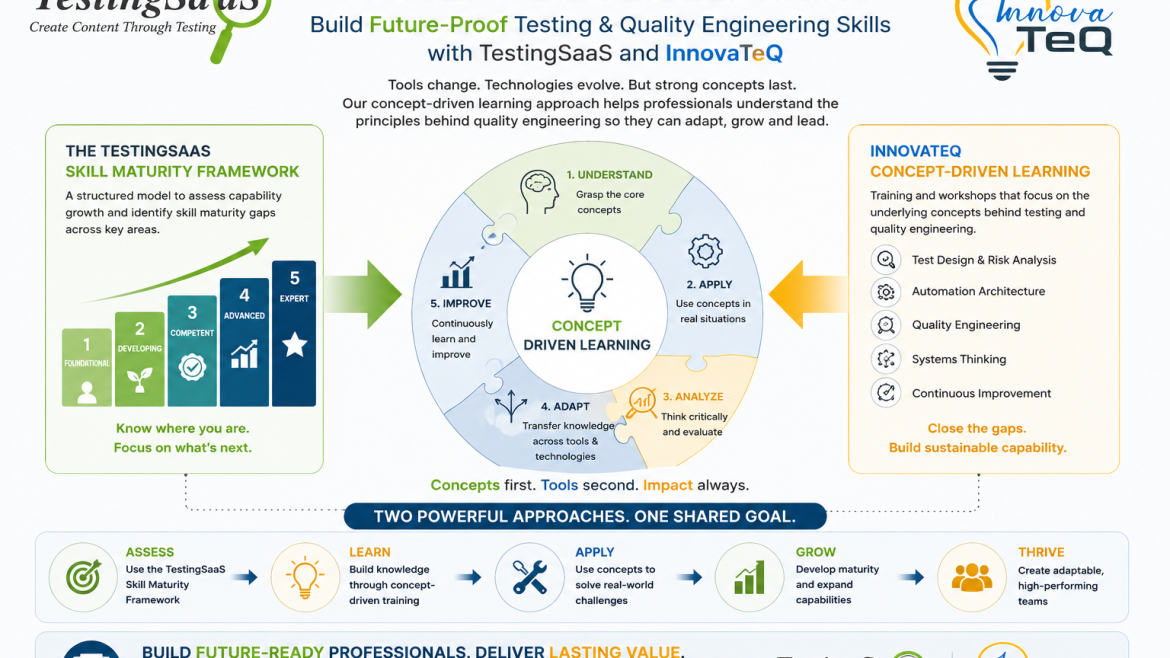
Why Concept-Driven Learning Matters
Technology evolves rapidly.
Today’s popular testing framework may be replaced in a few years.
The underlying concepts, however, remain relevant.
At TestingSaaS and InnovaTeQ, we focus on concept-driven learning.
By understanding principles such as testability, observability, maintainability, systems thinking, and risk-based testing, professionals can adapt confidently to new tools and technologies throughout their careers.
This creates future-proof Quality Engineering teams.
Assess Your Team’s Learning Journey
Ask yourself the following questions:
- Are we only providing training, or are we supporting implementation?
- Do our teams have opportunities to practise new skills?
- Are workshops helping us solve organizational challenges?
- Do we provide coaching after learning events?
- Is continuous improvement embedded in our culture?
- Can we measure the business impact of learning?
If the answer to several of these questions is “no,” your organization may be leaving significant value on the table.
The TestingSaaS Learning Journey
At TestingSaaS, in partnership with InnovaTeQ, we believe capability development is not a destination but a continuous journey.
Our approach combines:
- Awareness through thought leadership and knowledge sharing.
- Training to build technical and strategic capabilities.
- Practice through hands-on assignments and pilots.
- Workshops to solve real organizational challenges.
- Coaching to support sustainable adoption.
- Continuous improvement through reflection, measurement, and optimization.
Together, these stages help organizations move beyond learning and create lasting performance improvements.
Your Takeaway
High-performing Quality Engineering teams are not built through a single course or certification.
They are built through a structured learning journey that combines education, application, collaboration, coaching, and continuous improvement.
The organizations that invest in this journey don’t just develop better engineers—they build teams that adapt faster, innovate more confidently, and consistently deliver higher-quality software.
Learning creates capability.
Capability enables performance.
Performance delivers lasting business value.