

Most engineers don’t get stuck because they lack effort.
They get stuck because they stay in operations mode.
They manage pipelines.
They respond to alerts.
They fix issues.
And they are get very good at it.
But at some point, operational excellence stops translating into growth.
This is where architectural thinking begins.
The Plateau Between Operator and Architect
Within the TestingSaaS Skill Maturity Framework, this is the transition from a problemsolver to a designing architect :
Level 2/3 → Level 4
From:
- Managing systems
- Executing tasks
- Solving known problems
To:
- Designing systems
- Anticipating trade-offs
- Influencing long-term decisions
Most engineers plateau here.
Not because they can’t grow.
But because they are never taught how.
What Is Architectural Thinking?
Architectural thinking is the ability to move from:
“How do I fix this?”
to:
“Why does this system behave this way, and how should it be designed instead?”
It’s about seeing systems as interconnected, evolving structures, not just components.
Key characteristics
An architectural thinker:
- Understands cause and effect across systems
- Thinks in trade-offs (cost vs performance vs reliability)
- Designs for failure, not just success
- Considers long-term impact, not just quick fixes
The Operational Trap
Operations feels productive.
You:
- Close tickets
- Improve pipelines
- Fix incidents
But over time:
❌ You optimize symptoms
❌ You repeat patterns
❌ You stay reactive
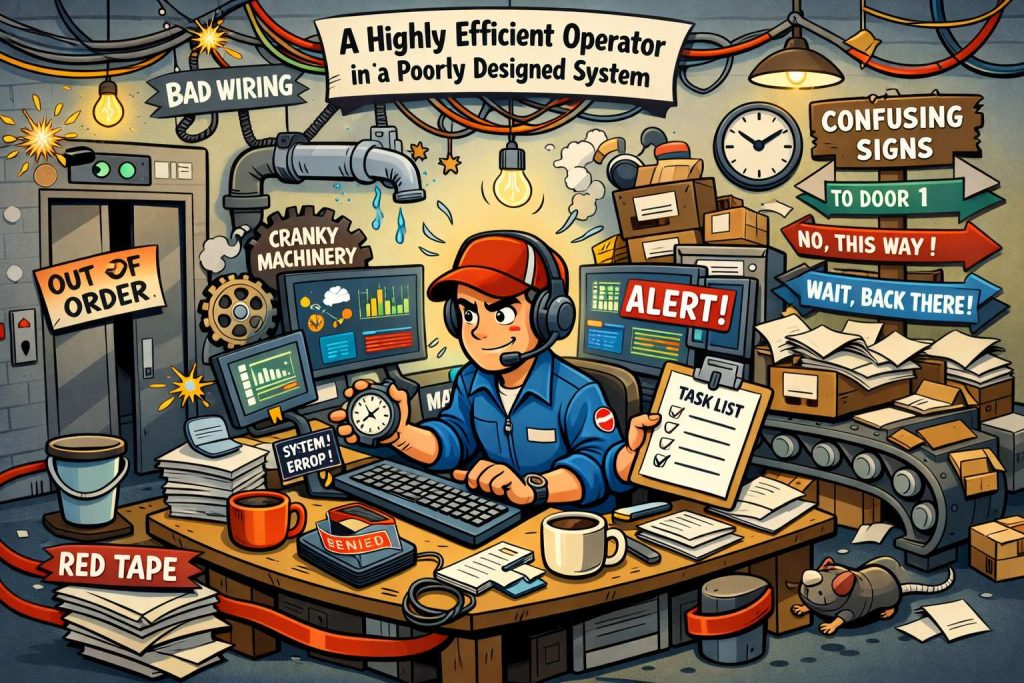
Without architectural thinking, you become:
A highly efficient operator in a poorly designed system
The Shift: From Doing to Designing
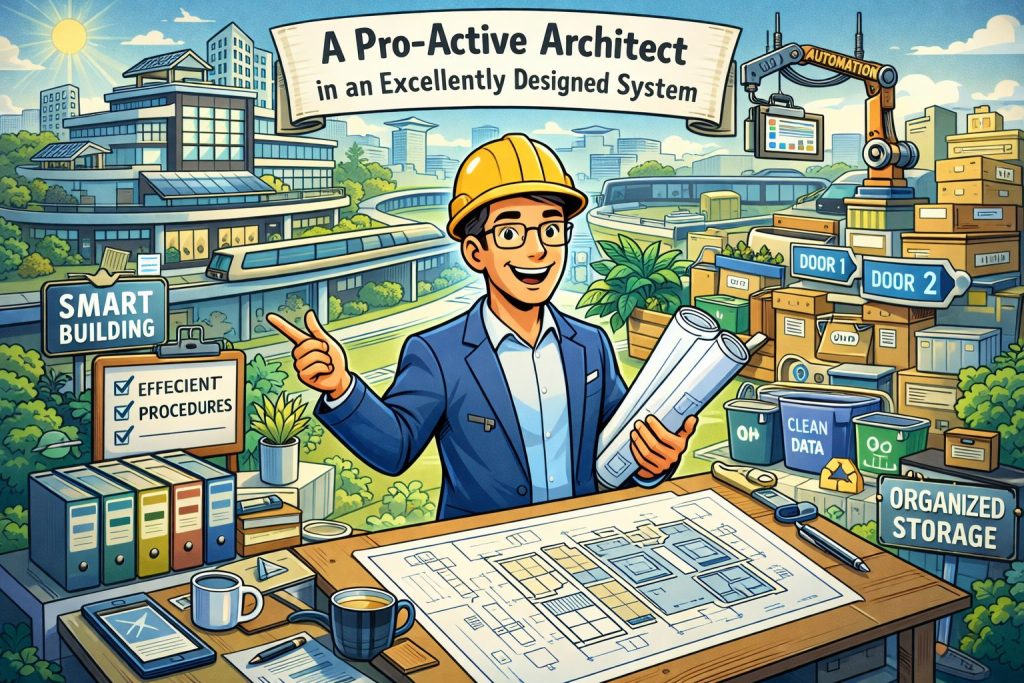
To move forward, your mindset must shift:
| Operational Thinking | Architectural Thinking |
|---|---|
| Fix the issue | Redesign the system |
| Follow best practices | Question assumptions |
| Focus on components | Focus on interactions |
| React to alerts | Prevent failure modes |
Where This Fits in the TestingSaaS Skill Maturity Framework
In the TestingSaaS Skill Maturity Framework, this shift looks like:
Level 2/3 — Operator / Analyst
- Manages monitoring and pipelines
- Performs root cause analysis
- Solves known issues
Level 4 — System Thinking (Architect)
- Designs systems with intent
- Understands trade-offs
- Influences architecture decisions
Level 5 — Strategic Technologist
- Aligns systems with business goals
- Optimizes across teams
- Thinks in sustainability and impact
Architectural thinking is the gateway skill
Let’s illustrate it with some examples.
Example 1 — Performance Issue
Operator mindset:
- Optimize query
- Add caching
- Scale server
Architect mindset:
- Why is this request expensive?
- Should this be synchronous?
- Can we redesign data flow?
Example 2 — Observability
Operator mindset:
- Add dashboards
- Set alerts
Architect mindset:
- What signals actually matter?
- Are we measuring user experience or system noise?
- How does observability support decision-making?
Example 3 — Green IT
Operator mindset:
- Reduce CPU usage
- Optimize images
Architect mindset:
- Can we reduce unnecessary computation entirely?
- What is the carbon impact of this architecture?
- Can we redesign for efficiency at system level?
Why Most Learning Resources Fail
Most content focuses on:
- Tools
- Tutorials
- Implementation
Very little focuses on:
- System design thinking
- Trade-offs
- long-term architecture
That’s why many engineers stay stuck between Level 2 and 3.
How to Develop Architectural Thinking
1. Study systems, not tools
Instead of:
“How does this tool work?”
Ask:
“Why does this system exist?”
2. Practice trade-off thinking
Every decision has consequences:
- Performance vs cost
- Speed vs reliability
- Simplicity vs flexibility
Train yourself to see them.
3. Reverse-engineer systems
Take an existing system and ask:
- Why is it designed this way?
- What are the bottlenecks?
- What would I change?
4. Use observability as a thinking tool
Observability is not dashboards.
It’s a way to understand:
- system behavior
- user impact
- hidden complexity
5. Think beyond code
Architecture includes:
- infrastructure
- data flow
- team structure
- business constraints
Final Thoughts
Skill growth is not about doing more.
It’s about thinking differently.
The move from Operator to Architect is not a step up in tools.
It’s a step up in perspective.
And once you make that shift:
You stop fixing systems.
You start shaping them.
👉 If you want to understand where you stand in this journey, explore the TestingSaaS Skill Maturity Framework on testingsaas.nl.
👉 And some free advice:
Follow this course to get the architect skills needed in this age of observability and AI.
Observability Strategy Pillars: Build Real Observability Capability